Colorever: Gem Art Puzzle
Oakever GamesPuzzle
4.7164.00 Reviews
- Version
- 1.17.0
- Installs
- 500.00K
- Age Rating
- Everyone
Screenshots
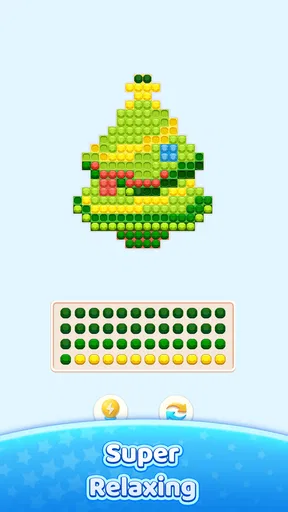
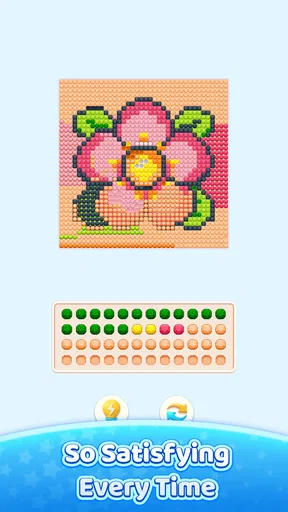
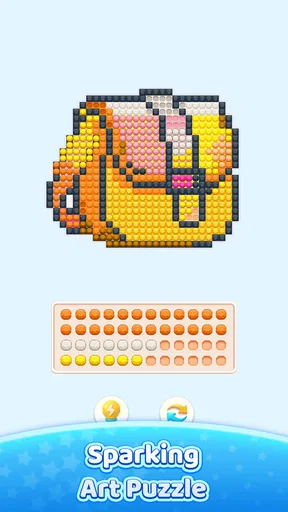

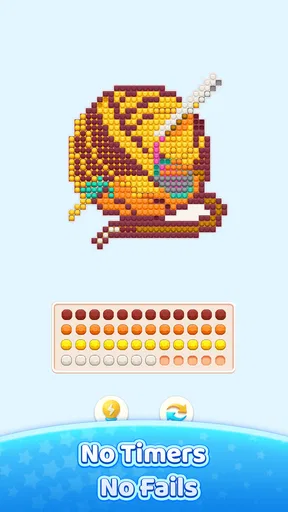
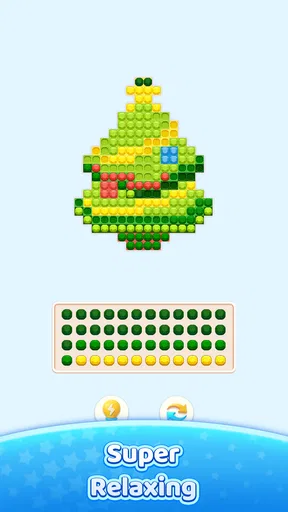
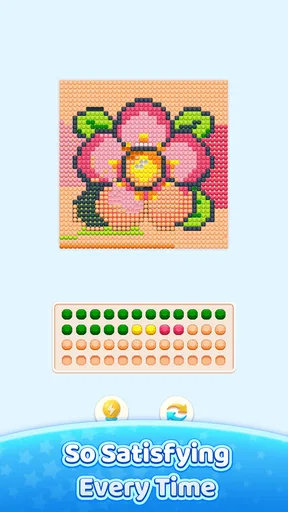
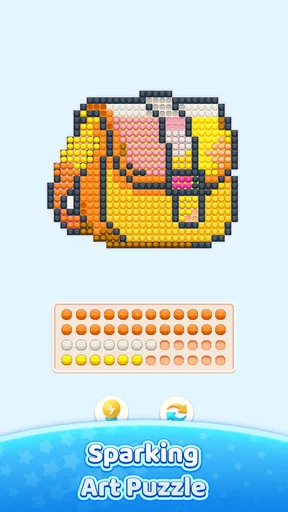
Our Review of Colorever: Gem Art Puzzle
 Analysis by Appyee
I approached Colorever: Gem Art Puzzle expecting a quiet way to fill a few spare minutes, and that is exactly where it works best. This is a free puzzle game from Oakever Games built around completing gem-style artwork rather than racing through levels or dealing with failure screens. Its central idea is simple: choose a picture, place the matching pieces, and watch the image become more complete.
That simplicity is not a weakness by itself. In my experience, it gives the game a calm rhythm that suits short breaks, evening downtime, or anyone who finds traditional puzzle games too demanding. The important distinction is that this is not a test of speed or a competitive challenge. It is closer to a small digital craft activity, with enough interaction to keep my attention but not so much pressure that I felt pushed to perform.
The game is listed in the puzzle category, carries an Everyone age rating, and is available at no cost to start. It has reached over 500 thousand installs and holds a 4.7 average from around 5.2 thousand ratings, which suggests that its relaxed approach has found a receptive audience. Those figures do not change the experience itself, but they do make the game feel like an established choice rather than an obscure experiment.
Why the gem-art format feels so approachable
The strongest part of Colorever is the way it turns a familiar coloring concept into a puzzle routine. Instead of asking me to draw or choose colors freely, it gives the activity more structure through matching and placement. That structure matters because it removes the uncertainty that can make creative apps feel intimidating. I do not need artistic confidence to begin, and I am not judged on whether the finished picture looks like someone else’s version.
The lack of timers and fail states shapes every decision I make while playing. I can pause when I want, put the phone down, and return without feeling that I have wasted a turn. If I make a mistake, the experience does not become a stressful recovery exercise. For people who use games as a way to unwind, this is a meaningful design choice rather than a minor convenience.
I also noticed that the format supports a useful middle ground between passive entertainment and a more involved puzzle. Watching an image slowly take shape gives me a visible sense of progress, while identifying where pieces belong keeps my hands and eyes occupied. It is more engaging than simply scrolling through a gallery, but much gentler than a timed match game, a logic grid, or a difficult brain teaser.
One practical strength is how naturally the game fits fragmented attention. A typical session can be approached as a small task rather than a commitment to a long level. That makes it suitable for a commute, a waiting room, or a short break between household chores. I would not describe it as a game that demands a dedicated seat and a long uninterrupted session. Its appeal is precisely that it can be picked up and set aside without disrupting the mood.
A calm workflow that rewards patience
I found the best way to play was to resist the urge to complete every visible area immediately. Working across a picture in small sections made the changing image easier to read and kept the activity from feeling repetitive. This is a useful approach for younger players as well as adults who want something soothing: choose a manageable area, place pieces carefully, and let the picture provide the reward.
Another helpful habit is to treat the artwork as a visual guide rather than trying to remember every detail at once. When several pieces appear similar, I found it more comfortable to compare them with the nearby shapes and colors instead of scanning the whole image repeatedly. That turns the game into a gentle observation exercise. It is not a demanding memory challenge, but it does encourage attention to small differences.
The same workflow also makes Colorever a reasonable option for shared, low-pressure play. A parent and child can look at the same image and discuss where a piece belongs without the child being punished for taking longer. The Everyone rating supports that broad accessibility, although I would still choose pictures and play sessions according to the child’s patience and ability to handle small visual details.
For an adult, the game can work as a transition activity. I could imagine using it after finishing work, before reading, or while waiting for an appointment. It offers a clear change of focus without demanding the emotional investment of a story game. If I wanted to calm down but did not want to sit in complete silence, this kind of structured visual task would make sense.
Where it stands beside familiar puzzle alternatives
Compared with match-three games, Colorever feels less restless. Match-three titles usually depend on quick decisions, cascading effects, goals, and sometimes limited moves. Here, the emphasis is on completing an image at a comfortable pace. That makes Colorever a better choice when I want to reduce stimulation, but a weaker choice when I am looking for strategic depth or a strong sense of competition.
It also differs from traditional coloring apps. A free-form coloring tool gives me more creative control, while this game gives me clearer direction. If I want to experiment with unusual color combinations or make an image look deliberately different, a conventional coloring app would suit me better. Colorever is preferable when I want the satisfaction of making progress without having to decide every artistic detail myself.
Against crossword, sudoku, and logic-puzzle games, the trade-off is equally clear. Those alternatives can provide a more substantial mental workout and a stronger feeling of solving a problem. Colorever is lighter. Its challenge comes from visual matching and completion, not from constructing a complicated chain of reasoning. I would choose it for relaxation, not for serious puzzle training.
That comparison helps define the game’s identity. It does not need to compete with demanding puzzle titles on their own terms. Its value is in offering a slower, more forgiving form of interaction. Players who understand that will probably enjoy it more than players who install it expecting increasingly difficult brainteasers.
What may limit the experience over time
The same calm design that makes Colorever welcoming can also make it feel too gentle for some players. Because there are no timers and no fails, I never felt urgency pushing me forward. That is ideal when I want to relax, but it can reduce excitement if I am in the mood for tension, risk, or a meaningful consequence for a wrong move.
I also would not recommend it as the only puzzle game for someone who needs constant novelty. Completing gem artwork has a recognizable rhythm, and that rhythm is the main attraction. Once I understood the basic loop, the game’s enjoyment depended on whether I wanted another quiet picture rather than on discovering a radically different mechanic.
There is also a financial point worth keeping in mind. The game is free to download, while in-app purchases are listed at $5.99 per item. That does not automatically make the model a problem, but it means I would approach the game with a clear personal boundary. If I am happy with the free experience, I can keep it as a casual pastime. If I become invested in additional content or conveniences, individual purchases can become a more important part of the decision.
My advice is to decide before playing whether the free version already gives you enough value. This is especially useful for families, where a relaxed game can be passed between several people and the temptation to buy something may arise during ordinary play. The game’s core appeal does not require competitive spending, so there is no reason to treat purchases as necessary for enjoying the concept.
Device compatibility is another practical consideration. The listed minimum operating-system requirement is Android 7.1, and the current version is 1.17.0. That makes it relevant to people using older Android devices, although the actual comfort of play will still depend on screen size, touch responsiveness, and how easily each person can distinguish small visual elements. On a compact phone, detailed artwork may feel less comfortable than on a larger display.
I would also avoid presenting this as a replacement for every kind of relaxation. If I am mentally tired but still want a clear objective, it works well. If I want a story, social interaction, strategic planning, or a serious test of reasoning, it will feel limited. The game knows what it is, and the player needs to want that specific mood.
Who gets the most from it
Colorever is a strong fit for people who enjoy visual completion and prefer games without pressure. I would recommend it to casual players, adults looking for a quiet evening activity, and families seeking something approachable enough to explain quickly. The Everyone rating makes its audience broad, while the straightforward format avoids the learning curve found in many strategy and simulation games.
It may also suit players who normally avoid puzzle games because they associate them with countdowns, lives, penalties, or difficult late stages. Here, the absence of those pressures changes the emotional experience. I could concentrate on the image instead of worrying about a streak or a limited number of attempts.
For someone who uses a phone as a short-break tool, the game has a particularly sensible role. A realistic routine might be to open it during a ten-minute wait, complete one small part of an artwork, and close it when the appointment or bus arrives. Nothing about that routine requires a long session, and the unfinished picture gives me a natural place to continue later.
It is less suitable for players who want deep mechanics, competitive leaderboards, rapid reactions, or a strong narrative. I would also point experienced puzzle fans toward sudoku, nonogram, word puzzles, or logic games if their main goal is to stretch their reasoning skills. Those games offer a more demanding form of satisfaction, while Colorever focuses on visual calm and steady completion.
One less obvious use is as a way to create a screen-time boundary. Because the activity is divided into visible progress rather than endless scrolling, I can set myself a small target, such as finishing one section, and stop there. It is not a formal productivity tool, but its contained structure is healthier for me than opening an infinite feed when I only need a brief distraction.
Another useful trade-off concerns attention. The game can help occupy restless hands during a quiet moment, but it is not ideal when I need to listen closely to someone or remain fully aware of my surroundings. The visual matching still requires concentration. I would use it during a private break, not while walking, driving, or participating in a conversation that deserves my full attention.
My final view after spending time with it
My overall impression is that Colorever succeeds because it does not pretend to be more complicated than it is. Oakever Games has built a puzzle experience around a clear promise: complete attractive gem-style artwork at a comfortable pace. The absence of timers and failure pressure gives that promise a distinct personality, and the result feels more like a calming ritual than a conventional challenge game.
The rating of 4.7 from around 5.2 thousand ratings and the install count above 500 thousand fit my experience of a game that is easy to understand and easy to recommend to the right person. They should not be read as proof that every player will enjoy the same pace. The game’s success depends heavily on whether relaxation matters more to you than difficulty.
I would start with the free version and pay attention to how often I return to it. If I enjoy the artwork-completion loop and want more from that specific style, an item priced at $5.99 may be reasonable for my budget. If I find myself waiting for deeper puzzles or faster action, I would move on rather than trying to force this game into a role it was not designed to fill.
My recommendation is simple: choose Colorever when you want a gentle visual puzzle with no pressure, and skip it when you need strategy, competition, or a serious mental workout. For the right audience, it is an appealing little companion for quiet breaks, with enough interaction to feel satisfying and few barriers to getting started.
Verdict
Strengths of Colorever: Gem Art Puzzle
- Relaxing gem-by-number gameplay suitable for short sessions.
- Large variety of colorful designs and themed artwork.
- Simple controls make it accessible for most age groups.
- Satisfying visual effects when gems are placed correctly.
- Works well as a casual, low-pressure creative pastime.
Limitations of Colorever: Gem Art Puzzle
- Some artwork or tools may require in-app purchases to unlock.
- Repeated tapping can become monotonous during longer sessions.
- Small gem areas may be difficult to select on compact screens.
- Progress may feel slow without optional boosts or rewards.
- Ads can interrupt play depending on the version and settings.
Other Releases by Oakever Games
View All

Similar Picks in This Category
View All
Block Blast!
HungryStudio4.8

Braindom: Brain Games Test
Lahana Game Studio4.6

AMAZE!
CrazyLabs LTD4.6

Sudoku - Classic Sudoku Puzzle
Oakever Games4.7

Art Puzzle - Puzzle Games
Easybrain4.8

Amaze GO!
Oakever Games4.9
Frequently Asked Questions
What is Colorever: Gem Art Puzzle?
Colorever: Gem Art Puzzle is a relaxing coloring game built around gem-style artwork. Instead of painting freely with a brush, you complete pictures by placing colorful gems, crystals, or numbered pieces in their matching spaces. The experience is designed to be simple and satisfying, with bright illustrations, easy controls, and short levels that work well when you want a casual activity without complicated rules.
How do you play Colorever: Gem Art Puzzle?
Gameplay is straightforward: choose an available picture, select the required color or gem, and tap the matching sections of the artwork. As you fill each area, the image gradually becomes more detailed and colorful. The controls are generally comfortable on a touchscreen, although smaller sections may require careful tapping. Progress depends mainly on observation and patience rather than fast reflexes or advanced puzzle skills.
Is Colorever: Gem Art Puzzle free to download and play?
Colorever: Gem Art Puzzle can generally be downloaded for free, allowing players to try its main coloring and puzzle features without an initial purchase. However, free mobile games commonly include advertising, optional purchases, or limitations on certain content. Before downloading, it is worth checking the current Google Play or App Store listing for details about ads, in-app purchases, subscriptions, and any restrictions that may apply.
Does Colorever: Gem Art Puzzle require an internet connection?
An internet connection may be useful or required for functions such as loading new artwork, displaying advertisements, synchronizing progress, or processing optional purchases. Some previously loaded pictures may work offline, but this can vary depending on the version installed and the device. If you plan to play while traveling, test the game without Wi-Fi or mobile data first rather than assuming every feature will remain available.
Is Colorever: Gem Art Puzzle suitable for children and casual players?
The basic mechanics are easy to understand, making Colorever: Gem Art Puzzle suitable for casual players and families who enjoy colorful, low-pressure games. Parents should still review the age rating, advertising settings, and in-app purchase options before allowing children to play. The game is more focused on relaxation and visual completion than educational learning, competition, or complex strategic challenges.
Play our best games!


